
This ain’t Texas (woo!) This is Bedfordshire (hey!), a little county in rainy, old England. But let’s face it, it doesn’t matter where you are in the world, you can instantly picture the attire of a cowboy. With my recent accidental western style sewing project, (See previous article, The Evolution of Thea) I am now down a rabbit hole of Stetsons and Chaps and I just had to share. Trust me, you’re going to love it.
In The Beginning
The clothing we associate with the Wild West today began hundreds of years ago. With a collision of cultures from across the globe all having one thing in common, herding cattle. They each bought with them traditional and utilitarian clothing to suit the job at hand.
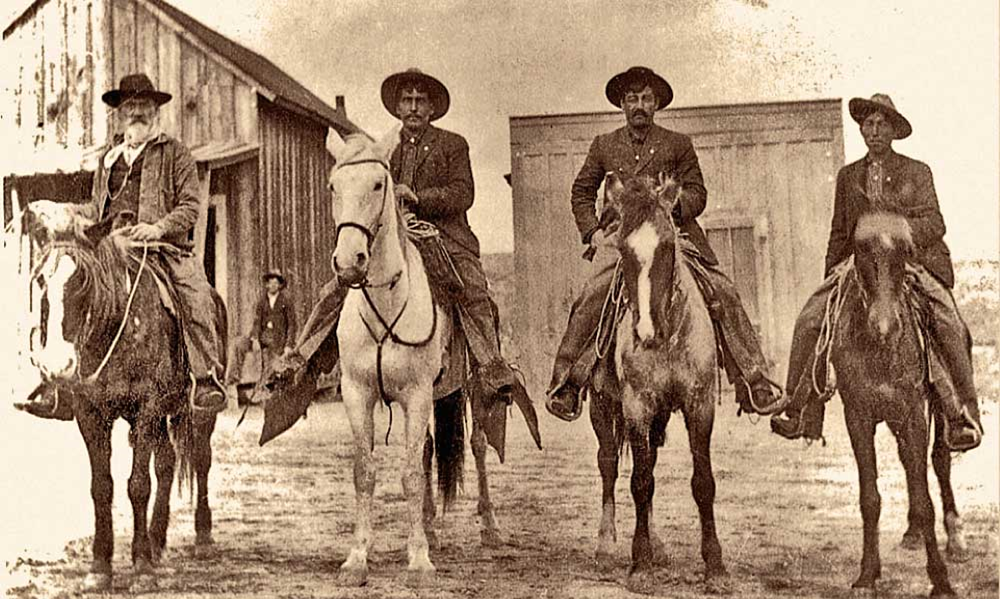
As early as the 16th century, expert horseman known as ‘vaqueros’ made their way from Spain and settled in America, first laying roots on land we now know as Mexico, bringing with them highly trained horses and their own breeds of cattle. A quote from an article about vaqueros on History.com explains that the European horseman would train the Native people their way of working. ‘The Native Mexicans also drew on their own experiences with horsemanship and hunting buffalo in order to refine vaquero techniques further.’ It’s amazing to think these origins would make their way to Hollywood, create a whole genre of music and eventually grace its presence on the catwalks of fashion week or on the hangers of Primark. Putting a little giddy-up in our get-up for centuries, never straying from high end or high street fashion.
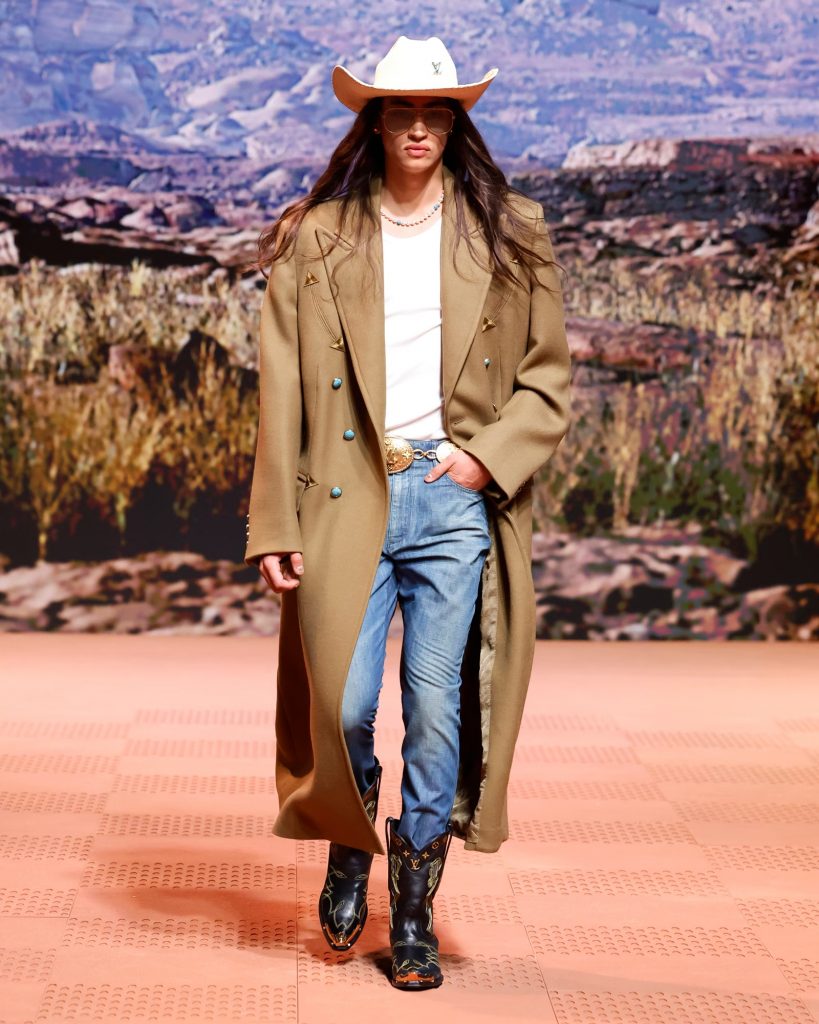
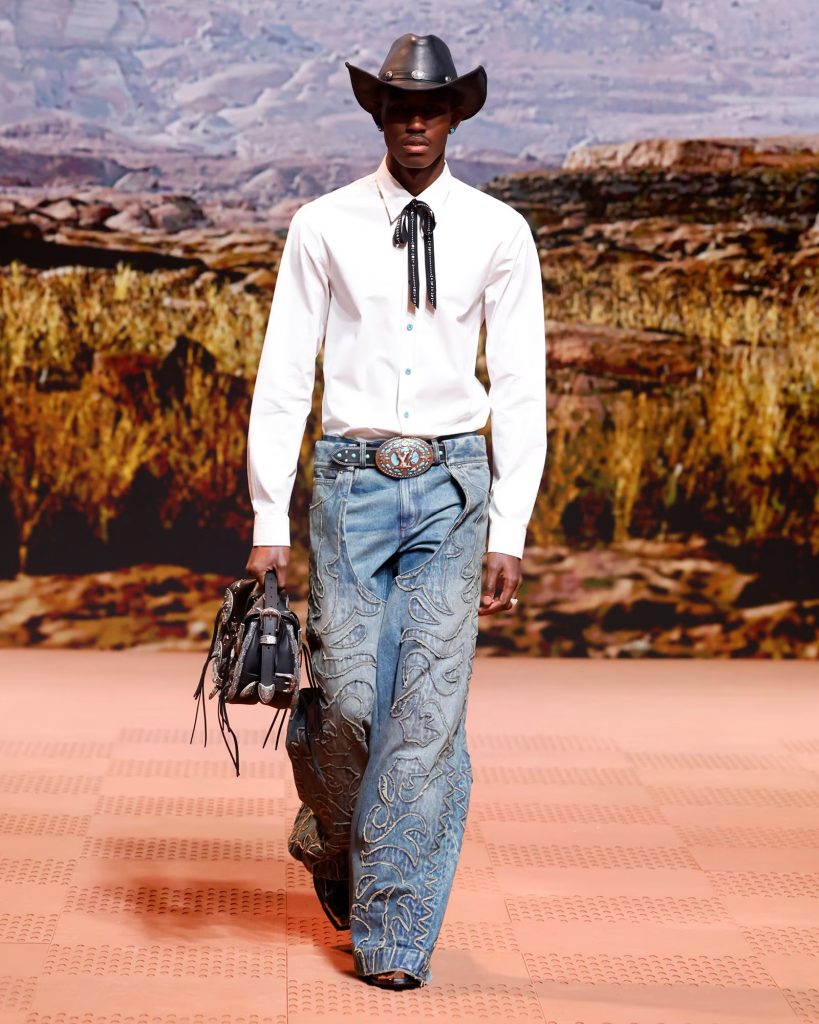
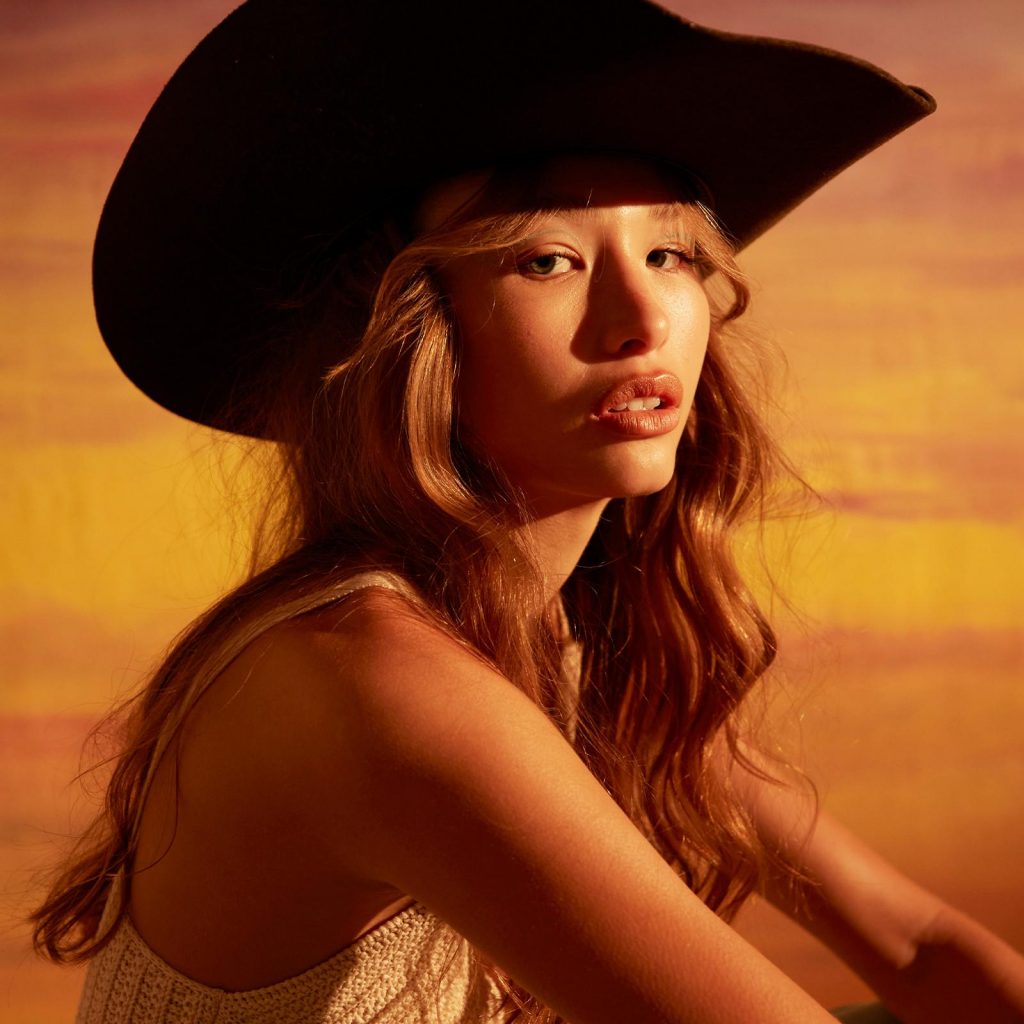
As well as the Spanish and the Native Americans, there was also a strong influence from enslaved African Americans, who are rarely mentioned in the history books. In fact around 25% of the population of cowboys and ranchers were African Americans. Smithsonian Magazine writes, ‘While Texas ranchers fought in the war, they depended on their slaves to maintain their land and cattle herds. In doing so, the slaves developed the skills of cattle tending (breaking horses, pulling calves out of mud and releasing longhorns caught in the brush, to name a few) that would render them invaluable to the Texas cattle industry in the post-war era.’
It wasn’t just techniques that were shared amongst the different cultures, but clothing too. There is so much history to delve into regarding vaqueros and cowboys, I could get carried away. (It is all so fascinating. I have listed my sources at the bottom of this post, so if you fancy it, I would recommend taking a look.) But for now, I want to focus on what they wore. Of course their job, the landscape, the weather and their own style and traditions all impacted the design of each garment.
From Head to Toe
THE COWBOY HAT
It’s got to be one of the most recognised accessory linked to a place or a job role in history. You can’t picture a cowboy without a hat, the two go hand in hand.
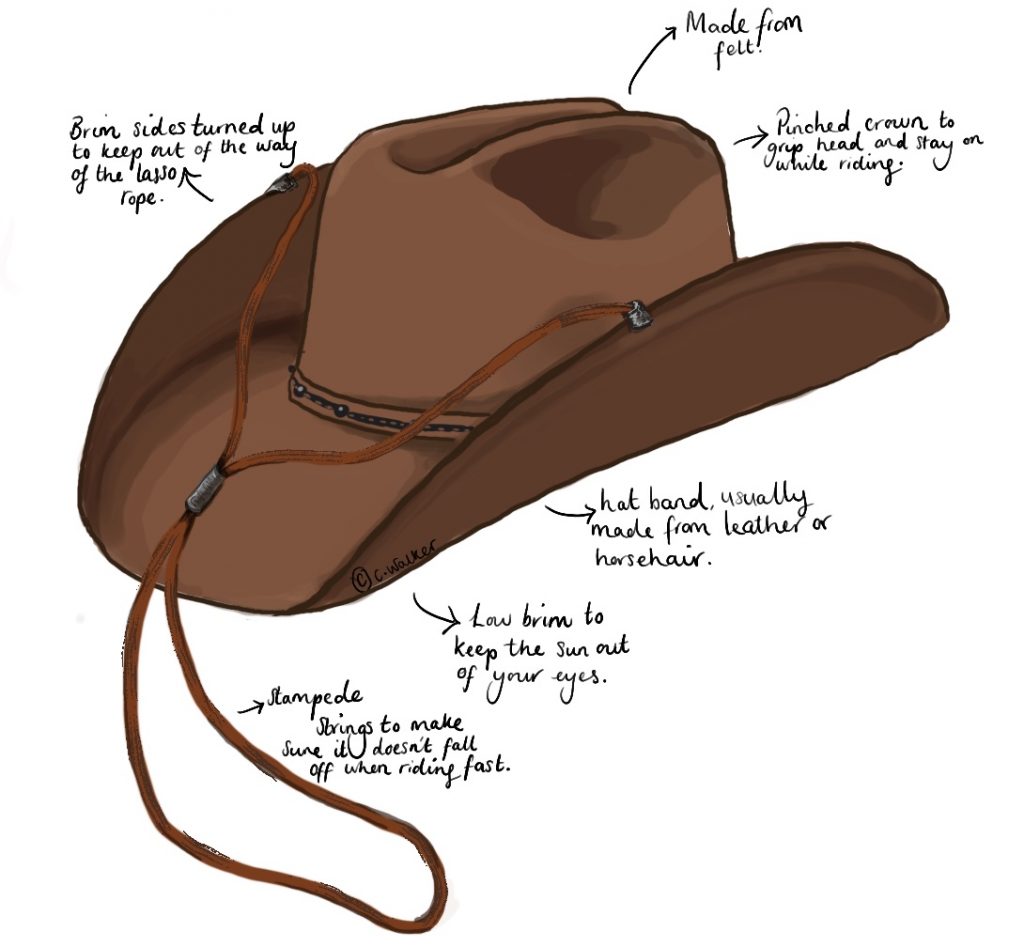
You can trace back the first cowboy hats to the Fulani people of Africa who were captured and forced into slavery, bringing with them skills not only in cattle herding but also practical garments like a wide brimmed, low crowned hat that would create the origins of what we would recognise as the traditional vaqueros hat, the sombrero. The vaqueros needed to make a lot of their garments out of leather due to the harsh terrain in which surrounded them and their hats were no exception.
The cowboy hat that we are familiar with today was the creation of John B. Stetson, who came from a family of hat makers. Around 1865, Stetson had been travelling around America working in mines. It was on his travels that he saw a group of Mexican men wearing a felt sombrero. He went on to recreate a style that suited cowboys and western colonial settlers, the felt blocked the rays of sun and was lightweight and breathable. This hat is now known as ‘The Boss of the Plains’. Traditionally, as for many style hats, ribbon was used as a hat band in Stetson’s designs. Research shows this to have come from a mark of respect when people were mourning the death of Prince Albert. During challenging work and weather, these ribbons would eventually fall off or tear. Cowboys would then replace these bands with whatever they had to hand such as bits of leather, feathers or horsehair. This became a way of personalising your hat, I’ve read stories that it was sort of a trophy to keep a rattle from a rattle snake tied to your band – a conversation starter for sure!
To progress the shape further into the hat we recognise today, cowboys would manipulate the hat to fit them and to fit their purpose. They would pinch the crown to give a snug fit when riding, the brim would be pushed up at the sides so when lassoing it wouldn’t get caught in the rope or knocked off when your arm is raised above your head. Stetson soon caught on and the ‘The Boss of the Plains’ was shaped in the factory and sold ready for all the cowboy action. Yeehaw!
NECKWEAR
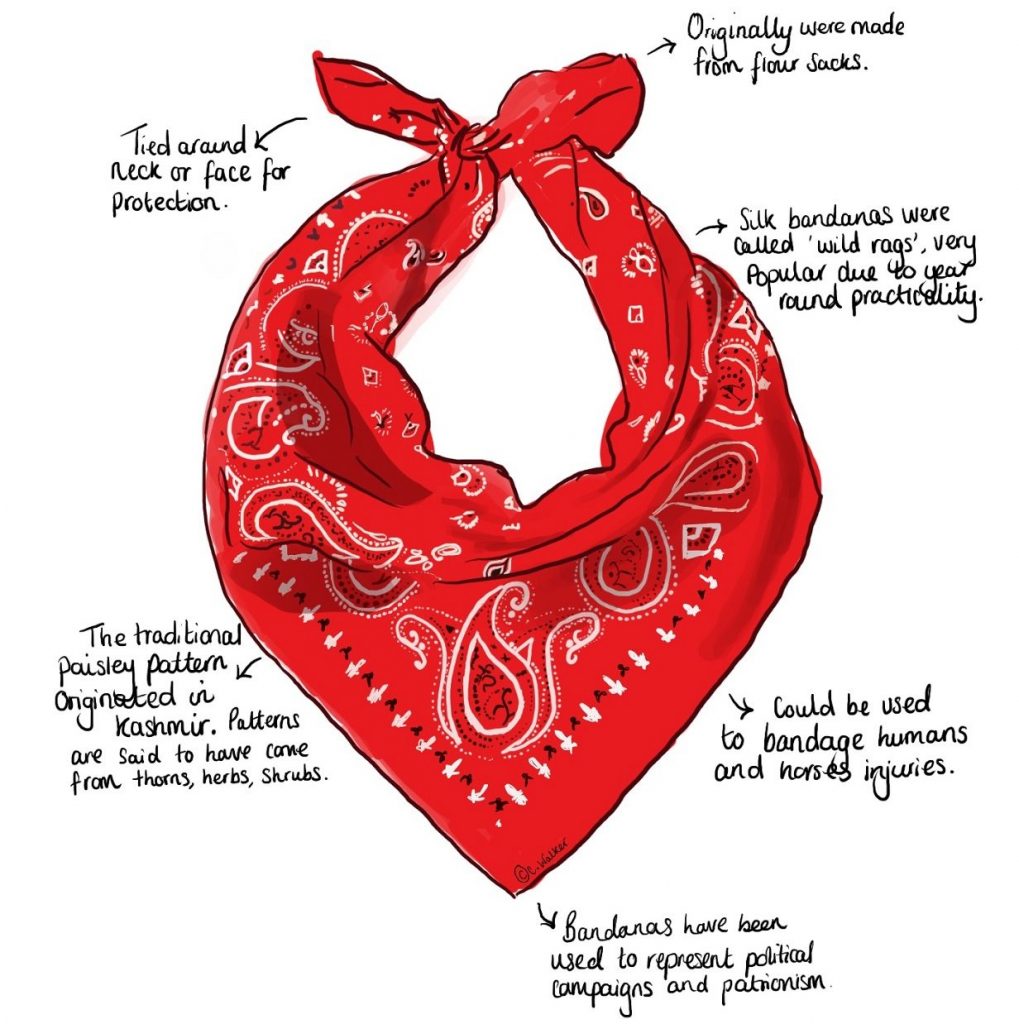
Many types of neckwear were worn in the Wild West or have been associated with cowboys. I’ve taken a paragraph from a page dedicated to western wear on Wikipedia as it sums it up perfectly – ‘During the Victorian era, gentlemen would wear silk cravats or neckties to add color to their otherwise sober black or grey attire. These continued to be worn by respectable Westerners until the early 20th century. Following the Civil War it became common practice among working class veterans to loosely tie a bandana around their necks to absorb sweat and keep the dust out of their faces. This practise originated in the Mexican War era, when troops threw away the hated leather stocks (a type of collar issued to soldiers) and replaced them with a cheap paisley kerchief.’ Read the full page here.
Bandanas have been used to make political statements over the years. The earliest record of this happening was during the American Revolution when Martha Washington, wife of Continental Army General, George Washington had a bandana designed and made with a print of her husband. It pictures George Washington wearing military regalia on horseback. The bandana is decorated with cannons, flags and snakes. There is also a ring of text circling him highlighting his dedication to liberty and independence.
THE WESTERN SHIRT
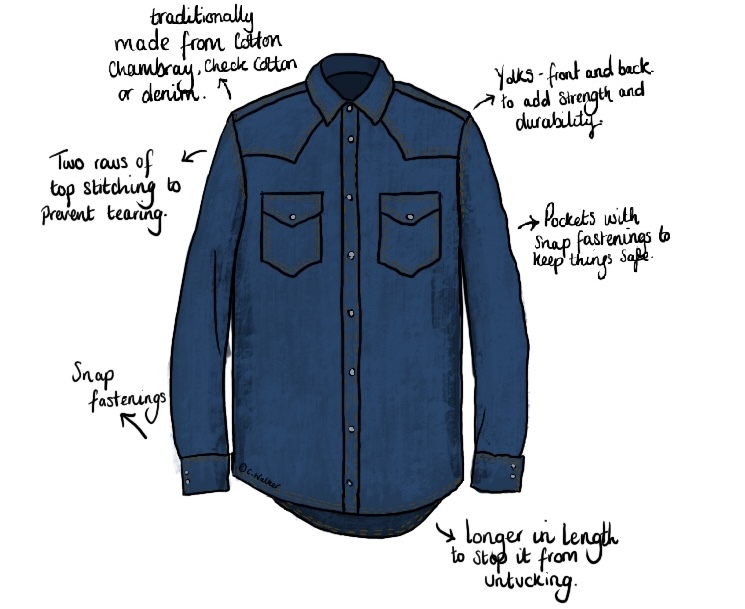
The western style shirt has its roots in the vaqueros style, the cotton and silks that the Vaqueros wore kept them cool. Cotton chambray was a popular choice, which is exactly the fabric I made my western style blouse out of (see The Evolution of Thea post). European settlers adapted this and started to use denim to add to the strength of the garment, making it more hardwearing and lengthening its lifespan. Denim is likely to survive a fall from a horse at speed; you might break your arm, but your shirt would probably be intact. The typical shirt we think of today has taken aspects of the vaqueros shirt and adding in the Confederate American Civil War soldiers uniform. The mix has created a more westernised style, of which is instantly recognisable across the world.
TROUSERS
Before jeans became the cowboy wardrobe staple, their trousers were typically made from wool or in summer, canvas. The goldrush of the mid 19th century bought with it a new kind of workwear; during this period, a tailor named Jacob W. Davis had commissioned small copper rivets to add to pockets and seams for reinforcement to the overalls he was already supplying to miners. The man he asked was Levi Strauss. Seeing the potential (and the profit!) in this companionship, they became permanent partners. They started out making their trousers and overalls from sail cloth but soon moved onto cotton serge de Nimes, the fabric we now know as Denim – ‘de nimes’ quite simply translates as ‘from Nimes’, a city in the south of France where the fabric was invented.
Naturally, denim isn’t blue. So why do we rarely see denim in its natural state? According to Readers Digest, ‘most dyes will permeate fabric in hot temperatures, making the colour stick. The natural indigo dye used in the first of Levi’s jeans, on the other hand, would stick only to the outside of the threads. When the indigo-dyed denim is washed, tiny amounts of that dye get washed away, and the thread comes with them. The more denim was washed, the softer it would get, and eventually achieving that worn-in, made-just-for-me feeling’. Like wearing in your cowboy boots for comfort, indigo dye would enable your jeans to do the same.
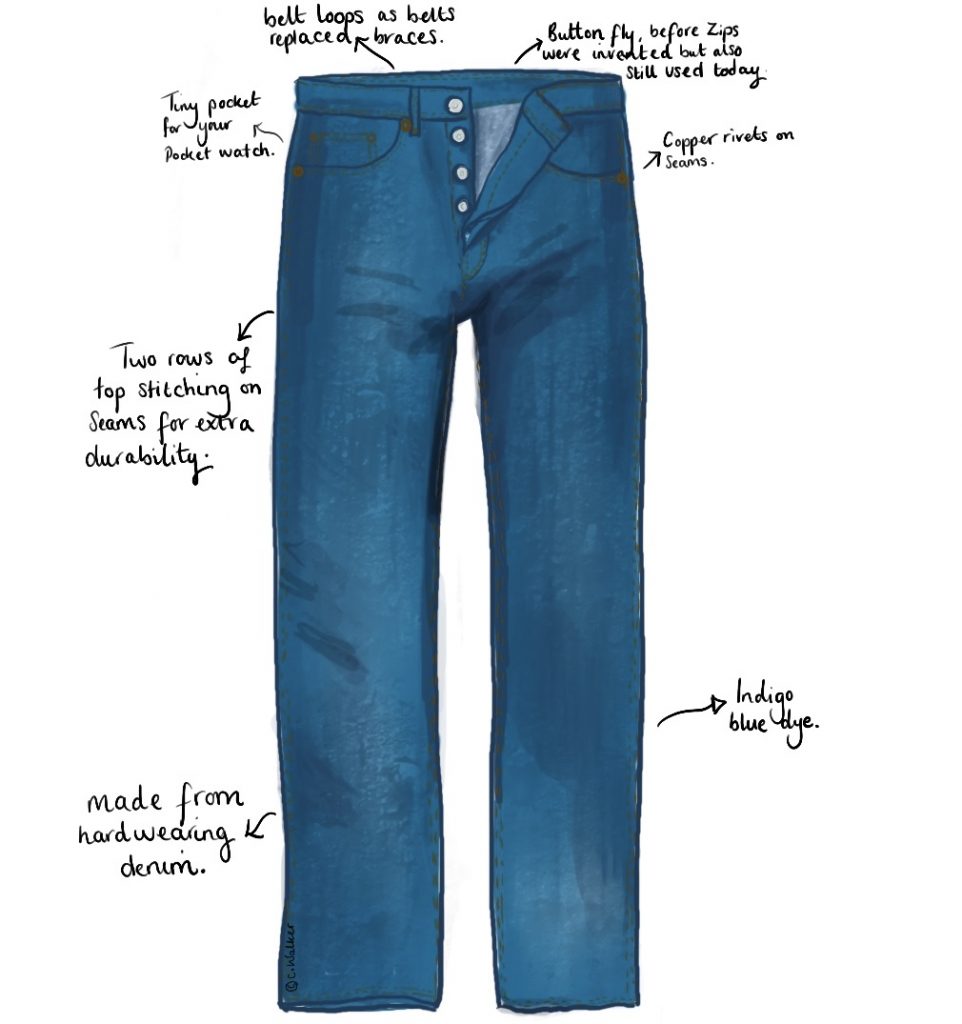
Oh, and that tiny pocket that sits on your hip, well that’s for your pocket watch! You wouldn’t want to risk it falling out of one of your other, more spacious pockets now would you? Wrist watches weren’t made for the mainstream market until WW1, when the soldiers needed a more practical way to tell the time. Can you imagine someone asking for the time while you’ve got your horse reigns in one hand and your rifle in the other? The wrist watch, or ‘trench watch’ was issued to soldiers as part of their uniform and thus became the norm for us all. The pocket watch fell out of fashion, but the little pocket remains as a reminder of its roots.
Further along the timeline, Levi Stauss started making denim trousers with belt loops, the first in America to mass produce this style. With the evolution of the cowboy ‘pants’, their loops made way for belts to over shadow the previously worn ‘suspenders’ (or ‘braces’ as we know them in the UK.) Around the same time as the evolution of belt loops on trousers, rodeos began awarding winners with rodeo belt buckles. Which I believe came from the style of European (and then American Civil War) military uniforms who were keen to keep their soldier’s looking sharp and well presented.
As I write these facts I can see how my own Grandad Joe, heavily influenced by a road trip across America in the early 1990’s, built his own style. He loved a big belt buckle, the shinier the better. He often wore jeans and a checked shirt for working in the garden or working on a project in his shed. His great grandchildren play with his belt buckles now, they’ve all got a little bit of love for country and western from their Grandad Joe!
Chaps
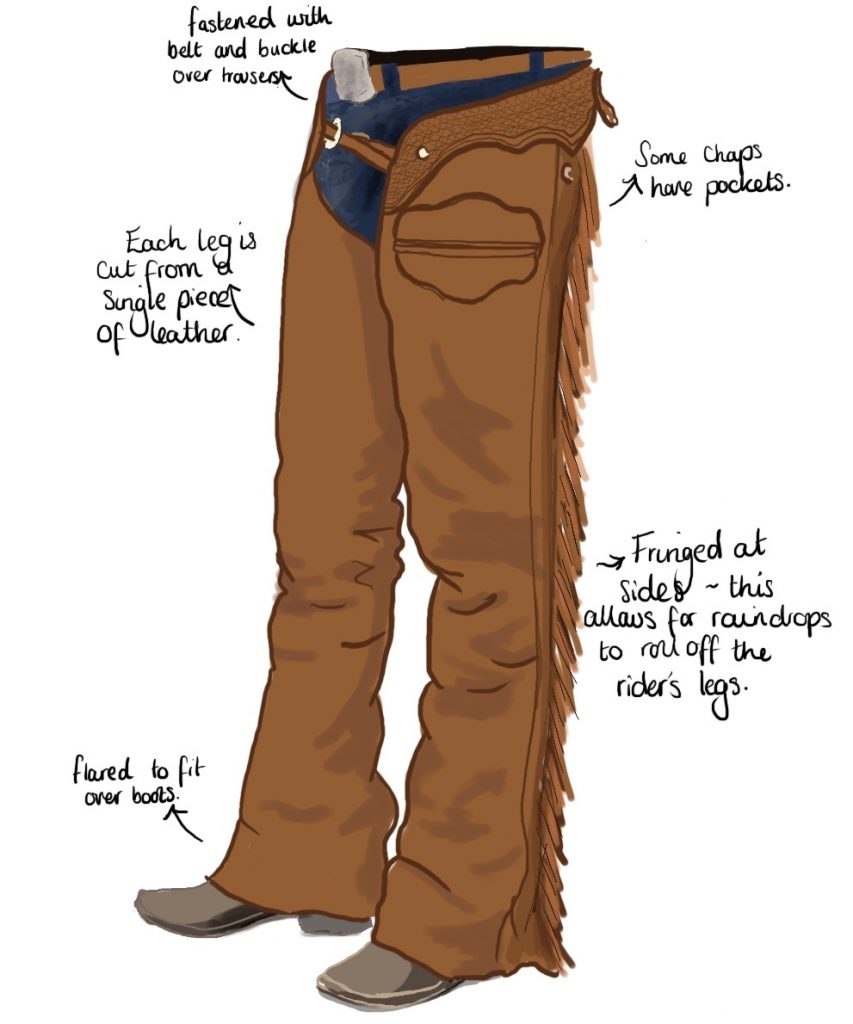
If you’re going to ride around the Wild West on horseback, you’re going to need to protect yourself and your clothes from thicket such as cactus spines. Leather or hide chaps were an essential part of the western attire if you were to survive the landscape.
They first started out as large pieces of leather that hung from the side of the saddle to protect the rider’s legs. These were a permanent fixture to the horse’s tack and soon evolved as the Spanish ranchers moved North. The leg coverings were gradually modified to suit the personal preferences of the rider and the working conditions. There are many different styles and shapes, one being “shotguns” because of the resemblance to a double-barreled gun.
I’ve always assumed that fringing was just for fun! However, whilst the style is used for decoration most of the time, the original purpose for fringe was to let raindrops roll off the rider’s legs, instead of letting water collect on the leather.
Boots
The cowboy boot trend has been creeping up on us once again here in the UK for a while now. Every high street store is now stocked with the stacked heel, the narrow toe and the curved and embroidered leather. We are going nuts for them. Which I am ecstatic about, I’ve had a black pair with electric blue embroidery in my wardrobe for the last 15 years and every now and then I get a little kick out of wearing them. They were a staple in my uni days. .
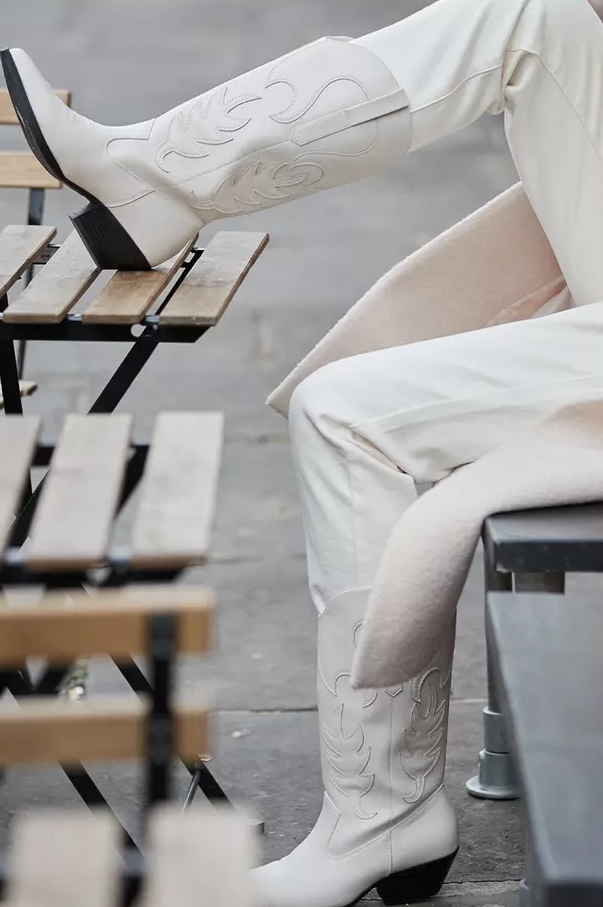
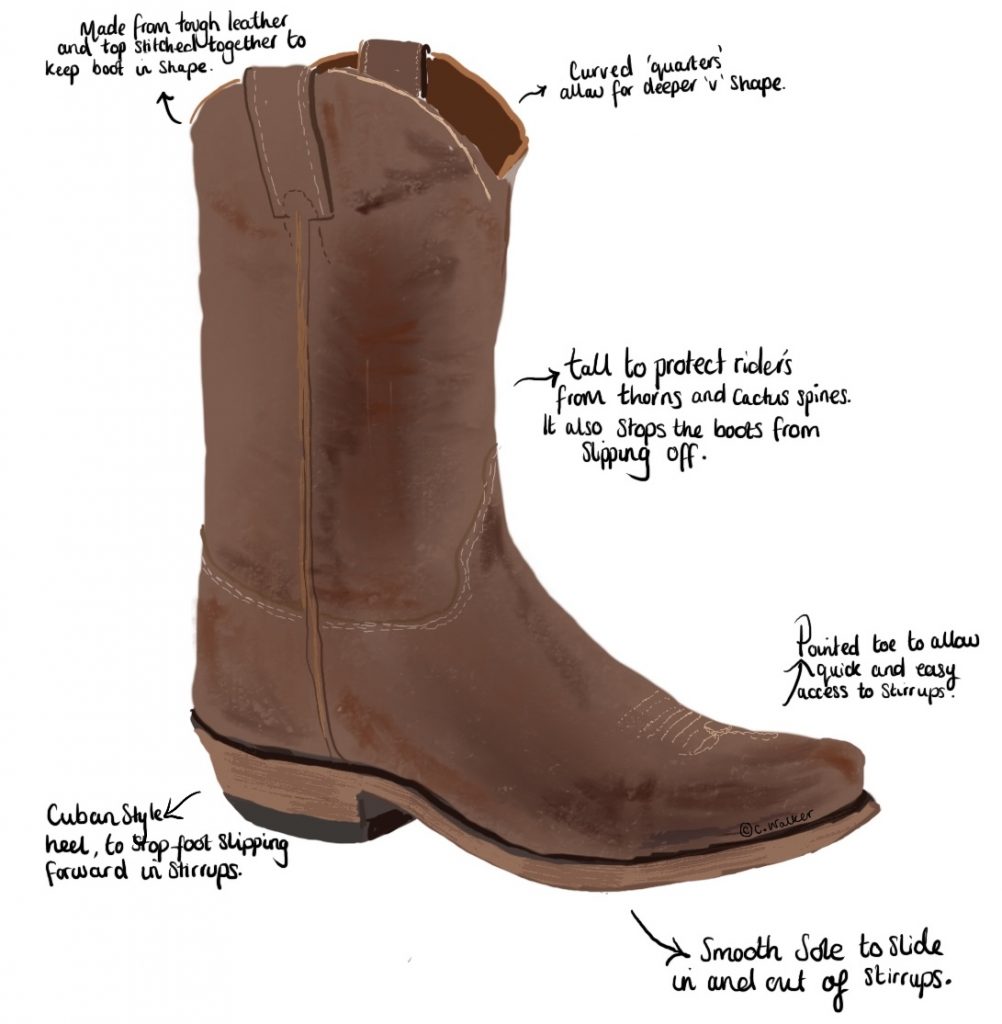
The anatomy of a western boot, as with all parts of the cowboy attire, has been created for practicality. The heel of of the boot was traditionally made of pieces of leather stacked on top of one another to create enough height to stop the riders foot from slipping through the stirrup, whilst the sole of the boot needed to remain smooth and treadless so that the rider could slip in and out of the stirrups with ease. This is also the reason for the rounded toe, shaped perfectly so the rider can get into position and make a quick get away if needed. The pointed toe came along later, purely for style and decorative reasons, this actually made the boots more uncomfortable to work in.
The length of the boot itself is designed to reach further up the calf than other style boots so that it is long enough to stay on the rider without the need for laces. Made out of a tough leather, this also protects the wearer from the thorns and brush the landscape provided but also to stop the stirrups from rubbing your ankles. When not riding, these boots will protect the cowboy from rough terrain and even rattle snakes. Like a wellington boot, the length of the boot would also mean you could stand in a depth of water without your boots filling up. They really are cleverly designed and are a real asset to any working rancher or cowboy.
I think you can really see the Vaqueros and Native American influence with the style of the boot. When customising became popular, adding decorative stitching or using other materials other than cowhide leather such as crocodile skin or other exotic animal hides (this is a topic for another blog altogether), the possibilities were endless. Especially when the boots were just for fashion purposes and not for practicality.
Fun Facts
Stampede strings – Another fabulous term given to us by cowboys. These strings would attach at the side of a cowboy hat and meet in the middle, they could either sit on top of the hat when not in use or be pulled down and tightened under the chin to keep your hat in place when you needed to ride at stampede speed!
Dude Cowboys – During the late 1800’s to early 1900’s, rich, city dwellers from the East Coast of America discovered that ranch visits in the West made for excellent holidays. Ranch owners eventually started promoting the idea and charging for these city slickers to play ‘cowboys’ and have their own Wild West Adventure. According to Wikipedia, ‘The term “dude” may have derived from the 18th-century word “doodle”, as in “Yankee Doodle Dandy”. ‘The word was used to refer to American Easterners, specifically referring to a man with “store-bought clothes”. A term used by cowboys to unfavorably refer to the city dwellers.’ Ever heard the saying ‘all the gear, no idea’? This pretty much sums up these guys, although I have read that a true cowboy would say these dudes are ‘All hat and no horse’…Excuse me while I add this to my everyday vocabulary and start looking up visits to Dude ranches, because they still exist and I want a Wild West experience of my own. Who’s with me?
Buckaroo – Vaqueros – pronounced B’akero – Is where the term buckaroo comes from. As well as now being the Spanish word for ‘Jeans’.
When did Denim Trousers become Jeans? The term “denim trousers/pants” would later be replaced by “jeans”. A distortion of the city Genoa, the main importer of the indigo pigment that makes denim famously blue.
Belts and belt buckles – around the same time as the evolution of belt loops on trousers, rodeos began awarding winners with rodeo belt buckles. The concho belt has been a part of the Native American/vaqueros community for far longer than the rodeo belt buckle. The word concho originates from ‘concha’ meaning shell, of which the silver, hammered discs that make up the concho belt resemble. The discs were first used as hair ornaments, strung together with cloth, horsehair or leather and worn vertically in the hair, sometimes reaching 6ft long! Native American women were the first to wear them as belts.
Cowgirls
Like much of history, women seldom made it into the books or some just simply written out of it altogether and replaced by men as if they were never there. Although we tend to think of men being the only ones working hard, they were not alone on the western frontier. Some could do the job just as well and some even better than their male counterparts and made their living honestly and dishonestly out in the Wild West.
The Homestead Act of 1860 allowed men and women to claim 160 acres in Western regions. Women needed to be at least 21 and unmarried to take part in this act but it did allow for women to express their pioneering spirits. It was also common for women to take over a ranch when their husbands passed away. Even though the Homestead Act allowed women to claim land, at this time it was challenging and extremely unsafe to be a women in the west. Most women disguised themselves as men just to survive and be taken seriously.
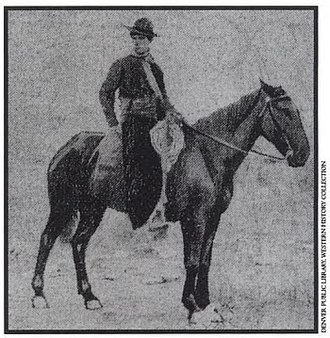
Josephine Monaghan dressed like a man to safely travel from Buffalo, New York to Idaho gold country, once there she didn’t change out of her male clothing. She continued to pass as a man and even managed to build a ranch and vote before it was legal for women to do so. It wasn’t until her death in 1904 that people discovered her true identity. While researching her, I have found that some websites still call her ‘he, him and his’ in their articles. (The photo to the left is of ‘Little Joe’ Josephine Monaghan).
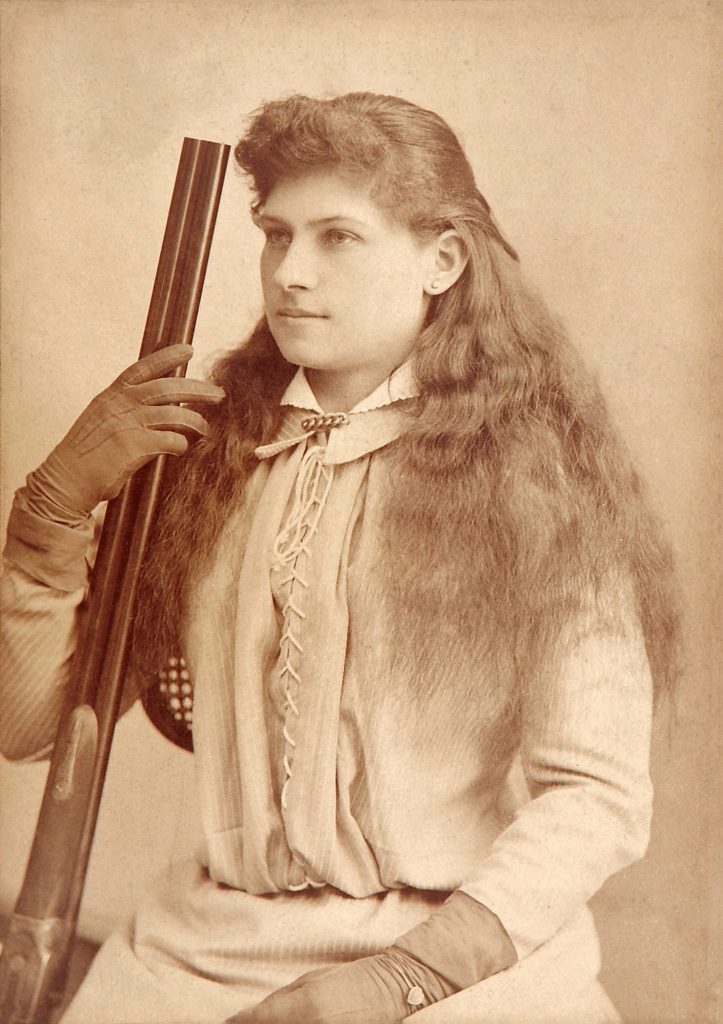
Some women opted to show their skills in a different setting. You may have heard of women such as Annie Oakley and Calamity Jane, these women, amongst many others made their living on the stage of the Buffalo Bill Show. According to ‘The Journal of Antiques’ article about women of the wild west (which is fantastic and well worth a read!) Annie Oakley was a ‘world-renowned master of dangerous trick shots’. She could hit dimes tossed into the air, she shot cigarettes from her husband’s lips. Annie Oakley was also an advocate for women fighting in combat. Throughout her lifetime, she passed on the art of shooting to more than 15,000 women.’ She went on to have an acting career and starred in a play written just for her called ‘The Western Girl‘.
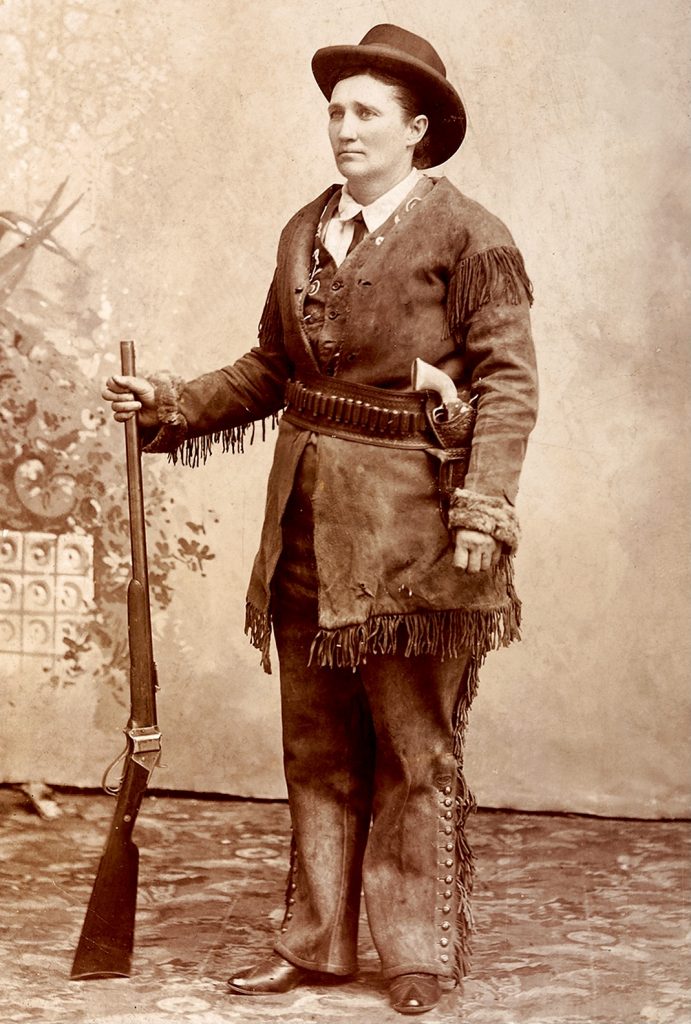
Calamity Jane was also one of Buffalo Bill’s headlining acts. After losing both of her parents on a long journey, which took 5 months, Jane and her 5 siblings took up whatever jobs they could to survive. Jane spent most of her teens hunting with men, learning to shoot and become a fearless rider. ‘ In 1870, she joined General George Armstrong Custer as a scout at Fort Russell, Wyoming, donning the uniform of a soldier. This was the beginning of Calamity Jane’s habit of dressing like a man.’ Having the reputation for being able to handle a horse better than most men and shoot like a cowboy, her skills took her into Buffalo Bill’s Wild West Show in 1895 where she performed sharpshooting astride her horse.
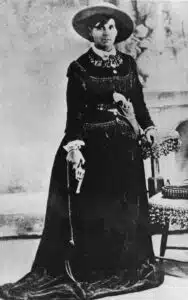
Whilst some women may have only broken the rules by disguising themselves as men and acting a little less than ‘lady like’, others became notorious outlaws. Belle Starr began her life as a well educated young girl who’s family home was under attack due to her brother being part of the Guerilla bands to act against the Union soldiers. Belle Starr stood by her brother’s beliefs and efforts. After the attack her family moved to Texas where Belle met her first husband. Her husband was involved in criminal gangs and associated with the Starr clan, a Cherokee family known to commit crimes involving whiskey, cattle, and horse thievery. After her first husband was killed, she went on to marry a Cherokee man called Sam Starr. Whilst married to Sam, she learned how to create a business out of crime, organising and planning horse thieves and bootleggers as well as harbouring criminals from the law. She was a successful businesswoman and earned enough to bribe the law to set her colleagues free if caught.
Belle Starr was known for her strong sense of style. Riding side saddle in her black velvet, full skirt gown with a plumed hat, carrying two pistols and her cartridge belts crossing at her hips.
Her lifestyle led to the death of her husband in a gunfight and then, on her 41st birthday, she was also shot in the back of her head, shoulder and face whilst riding back from a neighbours house.
I feel like she was some sort Cruella Deville of the Wild West, villainous but doing it in style.
From the Wild West to Hollywood
Cowboy films were a natural progression for shows like Buffalo Bill’s to have made their way to the silver screen. The popularity of such shows meant there was already a keen audience and Western films were enormously popular in the silent film era (1894–1927). The silent film ‘The Great Train Robbery’ of 1903 is said ‘to have set the pattern of crime, pursuit, and retribution—for the Western film as a genre’. The golden age of Western movies began in the late 1930’s and continued to rise, in the 1950’s, the number of Western films produced outnumbered all other genres combined. There were even ‘Movie Ranches’ created for the production of films and tv shows, ‘many movie studios purchased large tracts of undeveloped rural land, in many cases existing ranches, that were located closer to Hollywood.’
As I have learned a little about the origins of the wild west and the people who created the ‘cowboy’, I know that it wasn’t just white American men who were out there doing all the hard graft. I can’t help but notice, and I am not surprised at all, that the Hollywood version of the wild west has wiped out and modified some parts of the true history. In an article written about the Netflix film of 2021, ‘The Harder they Fall’, Complex UK has said, ‘one thing remains true of all of these interpretations of Westerns: that Black people’s existence and contributions to such periods is grossly overlooked. Westerns have always looked to evolve and expand on the unshone stories’. If I’m honest, I love the western style, love some of the music but I am not a fan of western films. My Grandad and Dad loved watching them and from a young age I have associated them with loud noises, people mumbling or shouting and horses falling over at speed and seeming to be hurt all in the name of Hollywood. It wasn’t my cup of tea at all and I’ve never paid attention to the acting or storylines. I may have to go and watch the Netflix film ‘The Harder they Fall’ because I have read a little about the fascinating people they have based the main characters on. Dan Snow’s History Hit podcast has a in depth chat with Tony Warner about the history of the African Americans of the west, ‘the real life individuals that have inspired the film (The Harder they Fall, Netflix), the role of black cowboys on the frontier and why they have been largely ignored by history and Hollywood.
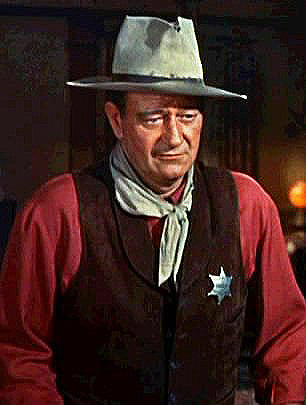
Hollywood’s film industry isn’t exactly known for being subtle and their take on Cowboy movies was no exception. The artistic licence of the directors and movie makers meant the cowboy aesthetic was ramped up and exaggerated into a ‘costume’ of the real deal. Eventually in the same way the cowboy aesthetic bubbled up from the ranches to the catwalks, the Hollywood cowboy style would trickle down, back into the society of the Wild West and heavily influence the way that real cowboys dressed. This is probably why the rest of the world pictures a ‘John Wayne’ looking character when we think of a cowboy.
Rhinestone Cowboy
YourDictionary.com describes a Rhinestone Cowboy as ‘A person, especially a country musician, who affects a cowboy -like image but with glamorous and fashionable accents.’ Which sounds quite fabulous. I won’t go into the history of country music here otherwise I will end up writing a book, but I think it’s important to acknowledge the industry for the style it brings to the wild west conversation.
In the early days, most professional country singers wore a casual style, women wore simple dresses and the men simple suits. This did begin to change once television and film became popular, moving from stage to screen meant the ‘costumes’ became more elaborate and visually exciting for audiences. Singer, songwriter and lead singer of Buck Owens and the Buckaroos, Buck Owens once said ‘The sound systems were so lousy back then that crowds couldn’t hear the music, so the clothes had to be loud‘. One of the most renowned tailors, who is thought to have started or at the very least, heavily influenced the ‘Rhinestone Cowboy’ look was ‘Rodeo Ben’ Lichtenstein. ‘Rodeo Ben’ was an Eastern European Jewish immigrant who made a new life for himself in America, with his parents, as a teenager. In 1930 he set up a tailoring business and created a vast clientele from the West Coast to the East Coast by mail order catalogs. His customers included country music acts and rodeo champions. As well as heavily embellished, colourful suits, Rodeo Ben also went on to design a pair of jeans specifically for rodeo competitors. This went on to become Wrangler’s classic Original Cowboy Cut jeans in 1947, this style had a wider gap in between the front belt loops to accommodate the biggest and shiniest of rodeo belt buckles and you can still buy them today.
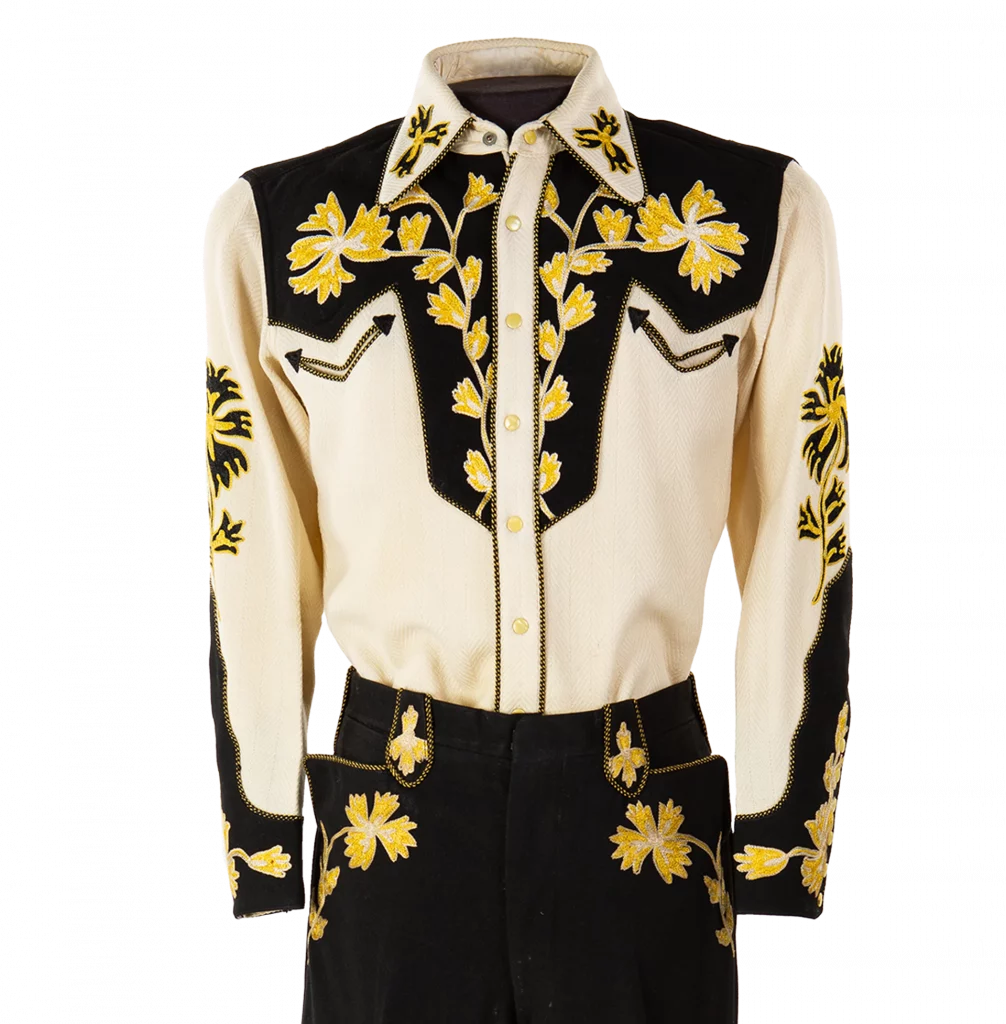
Moving on a decade or two later, the country music genre saw an influx of ‘Rock’ influences and acts such as Elvis and Johnny Cash were beginning to make a name for themselves. Whilst they were a big hit for some, many of the original style country fans were less than pleased that this kind of music was associated with the classic artists they all know and loved. This is where the ‘Rock n’ Roll’ style of country music became it’s own genre, known as ‘Rockabilly’. I think this was where my Grandad’s love of country and western started. He would have been a young man, after the second world war, witnessing the likes of Johnny Cash and Elvis brighten up his world that was still largely grey and depressing. He had the Teddy Boy hair cut and the clothes. I remember every Friday, my Nan and Grandad would take it in turns to listen to their favourite music at full volume whilst they cleaned their house from top to bottom. My Nan would often opt for opera, which was quite the contrast to my Grandad’s taste, although they both seemed to enjoy the variety.

Whilst I don’t think there has been a time where Western style hasn’t influenced fashion over the decades, even centuries; we are seeing a strong surge right now, not only here in the UK but world wide. I can’t finish this post without mentioning Beyonce’s new country album, you might already be sick of hearing Texas Hold Em’ due to the audio being used non stop on social media (I cannot get enough!). The western trend had been creeping up on us anyway, at least here in the UK with high street stores bringing back cowboy boots but now Beyonce has leapt straight in, we’re all here for it. According to usatoday.com, ‘The interest seems to be worldwide. Global Google searches for “cowboy hat” increased by 215.5% after commercial(featuring her latest album), with “cowboy boots” rising by 163%.’
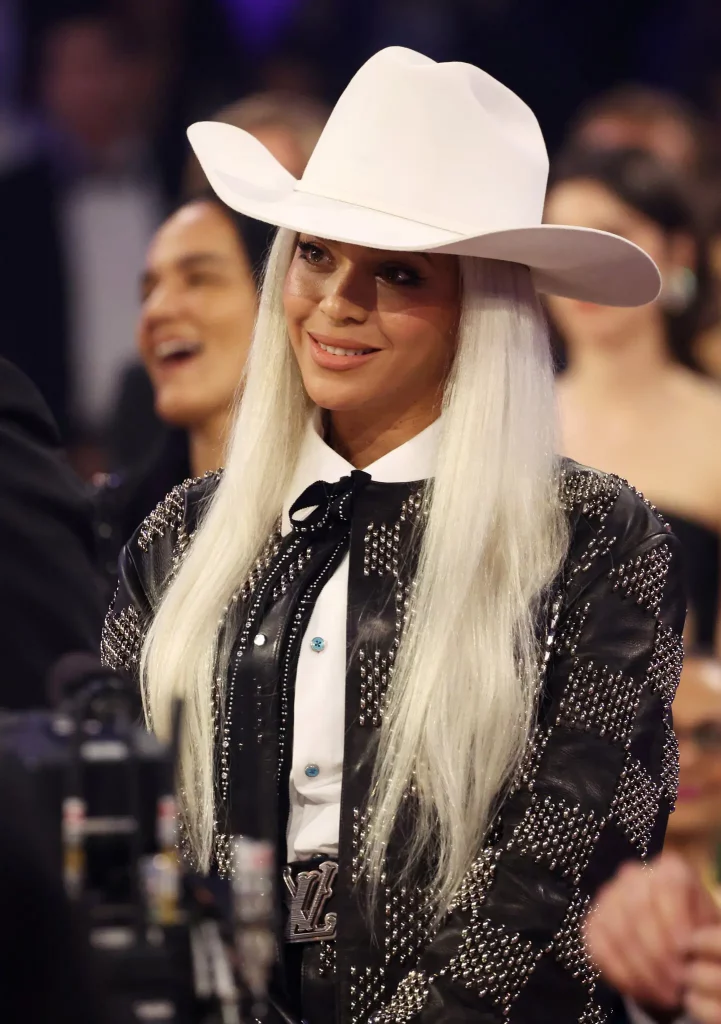
I can’t wait to see where this trend goes in the future, history is never ending and it seems that even though new influences come and go, the Wild West style will never go out of fashion.
PLAYLIST
I gathered all my favourite country influenced songs while I was making my ‘Thea Blouse’, I’ve added it below, enjoy!
Follow me on Socials!
Sources:
The Evolution of the Cowboy Hat
2 responses to “Wild, Wild West Wear.”
This is fascinating Charlotte. Such a lot of interesting research for something we take for granted and apparent in fashion which is seen everywhere through various styles . In every decade in my life variations are there. A nod to the cowboy remains. Well done! I have learned so much and enjoyed reading the blog!
Thank you ☺️ thanks for reading it! I had fun doing all the research and learning about it all. Xx